
What Makes the CDR Series Core Drill Rigs Ideal for Deep Core Sampling?
May 10, 2026
In mineral exploration, geotechnical investigation, and geological surveys, borehole data quality depends entirely on the recovered core sample. Core sampling, the process of extracting a continuous cylindrical subsurface rock section, forms the foundation of resource estimation and mine feasibility studies.
A high-performance core drill rig is the precision instrument that makes this extraction successful. The performance gap between a well-engineered rig and a basic machine impacts recovery rates, sample integrity, and overall project costs. When choosing a drill for core drilling, selecting a system that handles depth without compromising quality is critical.
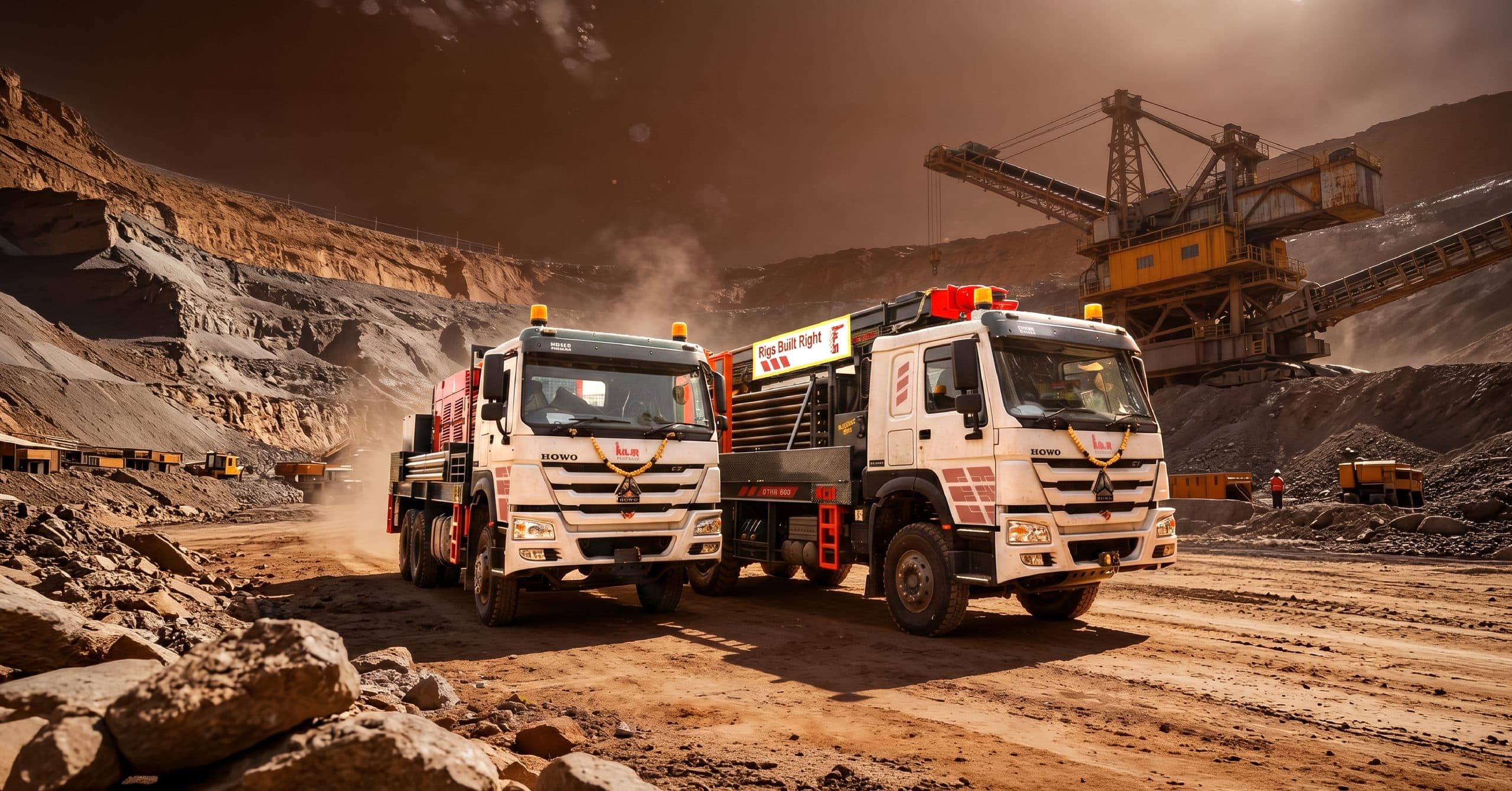
One of the leading drilling rigs manufacturers in India, KLR Universal’s CDR series offers purpose-built core drill rigs designed for deep core sampling across mineral exploration, geotechnical, and construction applications. This guide explains what separates a high-performance core drill machine from an average one, and why the CDR series is engineered for the depth, accuracy, and recovery rates that serious exploration programs demand.
What Is Core Sampling and Why Does It Matter?
Core sampling uses a hollow drill bit and core barrel to recover a continuous rock cylinder from a borehole. This preserves natural stratigraphy and mineralogy, which cannot be obtained from standard drill cuttings. Geologists log and assay this material using a drill core machine to determine mineralisation grades, structural faults, and aquifer characteristics.
Higher core recovery means better data. Accurate core hole drill operations are essential for mineral resource estimation and JORC compliance. Using a dedicated core drilling drill ensures retrieved samples remain intact and uncontaminated throughout the retrieval process.
Step-by-Step Core Drilling Process
- Drill Hole Design: Geologists define target depth and core size based on the geological model.
- Rig Setup: The operator positions the rig and installs collar casing to stabilise the surface.
- Drilling Commences: The diamond bit rotates under applied weight, cutting an annulus around a core plug that enters the inner tube during core barrel drilling.
- Retrieval: When full, workers retrieve the inner tube using wireline systems.
- Logging: Geologists describe the sample and mark mineralisation zones.
- Assay: Mineralised intervals are cut for laboratory assay.
- Completion: The core drilling machine for mining operates until reaching the target depth.
Using proper core drilling equipment prevents downhole assembly jamming during these steps.
Deep Core Sampling Rig Requirements
Deep drilling introduces intense forces that demand a specialized heavy-duty core drilling machine.
- Rotation and Torque: Rigs must deliver consistent torque without losing speed stability as formation resistance increases.
- Feed Force: Rigs must compensate accurately for drill string weight at depths over 500 meters to maintain exact weight on bit.
- Wireline Capability: Wireline systems retrieve the inner tube through the hollow drill string without pulling all the rods, saving hours of trip time.
- Flush System: High-pressure pumps must maintain flow to cool bits and lift cuttings.
| Feature | Value at Depth |
|---|---|
| Variable Rotation | Maintains optimal bit speed |
| Wireline Retrieval | Eliminates frequent rod pulls |
Choosing a combined core drill and rig setup with these capabilities prevents downhole failures.
Core Drilling Tools and Standard Sizes
Diamond impregnated core drill and bits cut through tough formations as the bit rotates. The double tube core barrel protects the core from flush water and rotation damage. Selecting the right core drilling tools depends on the required core diameter.
| Size Designation | Hole Diameter (mm) | Core Diameter (mm) | Application |
|---|---|---|---|
| NQ | 76.0 | 47.6 | Standard exploration |
| HQ | 96.0 | 63.5 | Deeper exploration |
| PQ | 122.6 | 85.0 | Maximum core recovery |
The CDR Series and TMC 40 Lineup
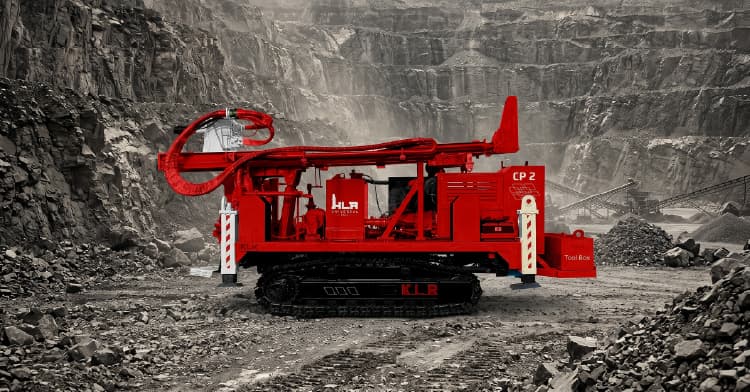
The KLR Universal CDR series is developed for precision mineral exploration, geotechnical investigations, and deep geological sampling. Manufactured at our ISO 9001:2015 certified facility, the range covers three depth tiers:
- CDR 150: Supports depths up to 150 meters, perfect for shallow exploration and soil characterisation in remote sites.
- CDR 500: Supports depths up to 500 meters at NQ and HQ sizes, balancing depth and operational costs perfectly.
- CDR 750: Supports depths up to 750 meters, providing high torque and massive pull-back force for advanced exploration.
For programs requiring high mobility, the TMC 40 is a compact core drill machine designed for NQ and HQ programs in restrictive terrains, supporting the same downhole tools as the CDR series.
Handling Depth Challenges
At depths over 300 meters, the drill string weight exerts a significant downward force. Standard machines cannot handle this load accurately. Rigs must provide precise weight on bit control to prevent bit crushing and borehole deviation.
Flushing efficiency also degrades at depth if the pump cannot maintain pressure, causing core blockages. A quality heavy duty core drilling machine overcomes these challenges, recovering coherent core even in weak or high-pressure formations where differential sticking occurs.
Conclusion
Deep core sampling places strict demands on your equipment. A purpose-built core drill rig featuring variable hydraulic rotation, wireline compatibility, and high-pressure flushing is the only reliable solution for programs where data quality is non-negotiable. Using underpowered equipment leads to core loss, damaged bits, and incomplete geological data.
At KLR Universal, we engineered the CDR series and the TMC 40 to meet these challenges head-on, providing the structural strength and deep hole reliability required to secure pristine samples. Contact our team today to find the perfect rig configuration for your next project.