
The Role of Exploration Drilling in Natural Resource Discovery
May 26, 2026
Modern life depends on resources hidden deep underground. From the lithium in your phone to the groundwater in your local aquifer, everything begins with a discovery phase. Exploration drilling is the primary method geologists and mining companies use to confirm exactly what lies beneath the surface before any expensive extraction begins. It turns geological theories into physical proof.
This guide explains what exploration drilling is, the common methods used, the equipment involved, and how it drives the discovery of minerals, energy, and water. We also look at how KLR Universal designs exploration drill rigs specifically for these high-stakes discovery missions.
What is Exploration Drilling?
At its core, exploration drilling is the process of creating boreholes to collect geological data or samples. Unlike production drilling, the goal here is not to extract resources for sale. Instead, it is about gathering information. It is the bridge between a surface survey and a multi-million dollar mining decision.
This phase is used across several sectors:
- Mineral drilling for metals like gold and copper.
- Energy projects involving geothermal heat or oil exploration.
- Locating safe and sustainable groundwater aquifers.
Without this step, feasibility studies and mine planning would be based on guesswork rather than hard evidence. It is a vital part of drilling and exploration.
Types of Exploration Drilling Methods
Choosing the right method depends on the rock type and the quality of the sample needed.
Exploration Diamond Drilling
This is the most common method for mineral exploration drilling. A diamond-impregnated bit cuts a solid, cylindrical core from the rock. This exploration core drilling provides a continuous record of the geology, allowing for precise chemical analysis. It is best for hard rock and deep deposits.
Reverse Circulation (RC) Drilling
RC drilling uses compressed air to return rock chips to the surface through an inner tube. It is faster than diamond drilling and is often used in the early stages of a mineral exploration program to cover large areas quickly.
Rotary Air Blast (RAB) Drilling
RAB is the simplest and cheapest method. It is used for shallow, near-surface testing to identify interesting areas before bringing in more expensive exploration drill rigs.
| Method | Best Application | Sample Quality | Relative Cost |
|---|---|---|---|
| Exploration Diamond Drilling | Hard rock mineral deposits | Highest (Continuous Core) | High |
| Reverse Circulation (RC) | Grade control and mapping | Good (Chips) | Moderate |
| Rotary Air Blast (RAB) | Early-stage shallow discovery | Lower | Low |
| DTH / Percussion | Hard rock and groundwater | Moderate | Moderate |
The Exploration Drilling Process
The exploration drilling process follows a logical sequence to manage financial risk:
- Target Generation: Analyzing maps and satellite data.
- Program Design: Planning hole depth and spacing.
- Mobilization: Moving exploration drill rigs to the site.
- Operations: Drilling and collecting samples systematically.
- Sample Handling: Dispatching cores to labs for assaying.
- Interpretation: Using results to build geological models.
- Decision: Determining if the project moves to a feasibility study.
The Role of Exploration Drilling in Mineral and Metal Discovery
Every operating mine started as a drill in a mineral exploration project. Core drilling mineral exploration provides the data needed to classify a resource as “inferred” or “measured.” This data is what convinces investors to fund a mine.
Today, this work is more important than ever. Drilling & exploration teams are searching for “critical minerals” like cobalt and rare earths that are essential for the global energy transition.
Exploration Drilling Equipment
High-quality data requires high-quality exploration drilling equipment.
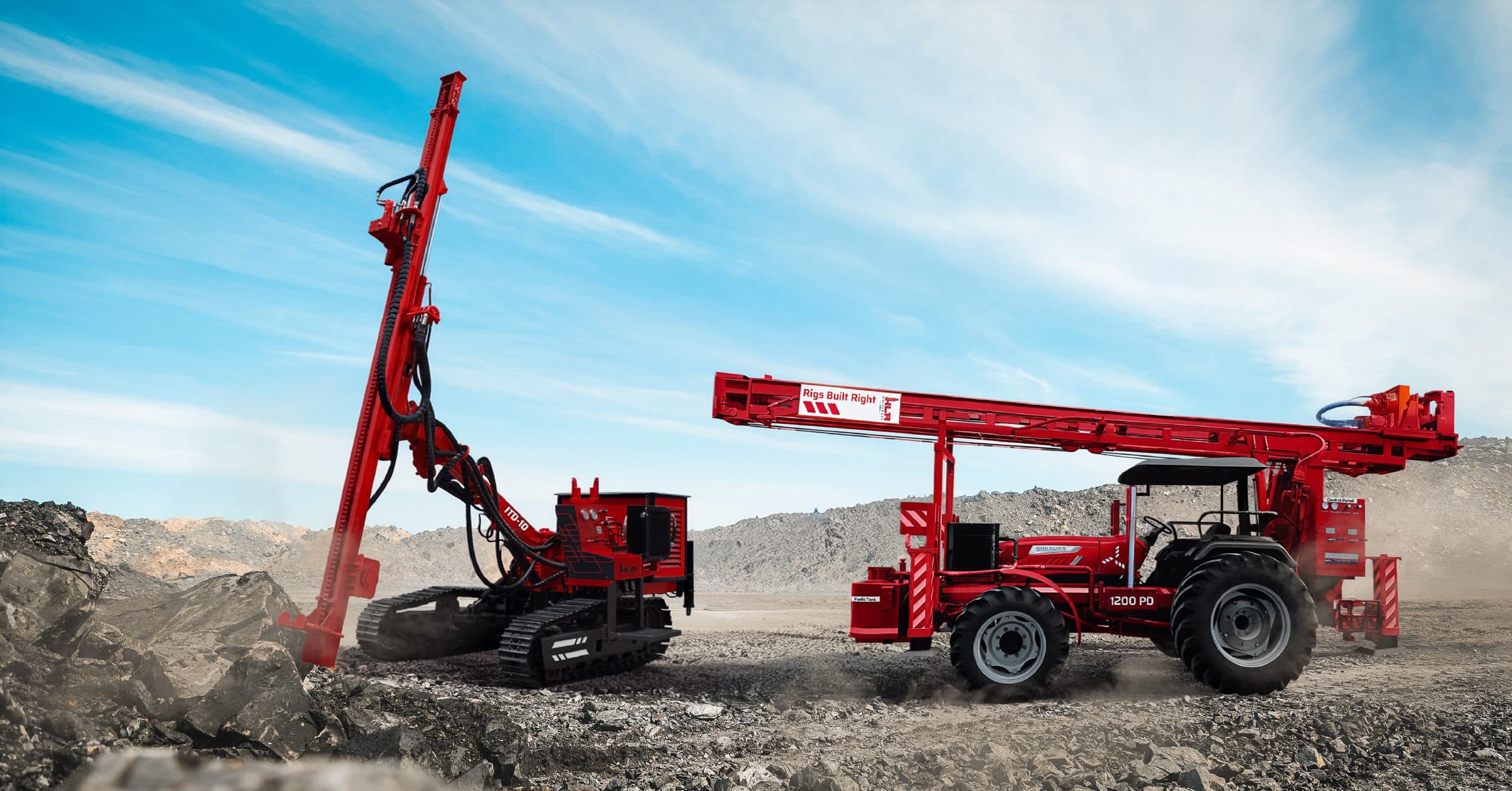
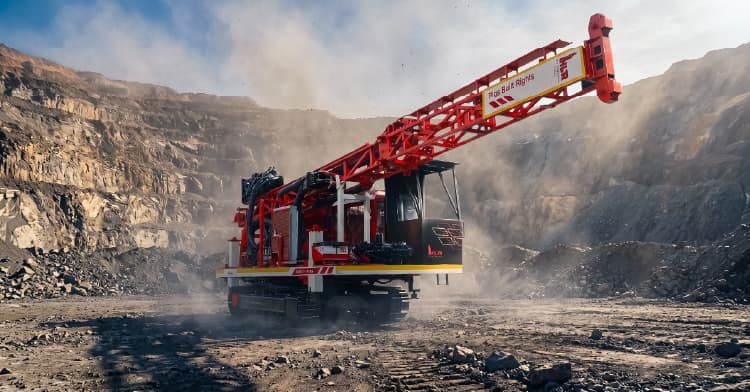
- Core Drilling Rigs: Built for precision and depth. These rigs must handle rods carefully to keep core samples intact.
- Multipurpose Rigs: These can switch between RC and diamond methods. Many exploration drilling companies prefer these for their versatility.
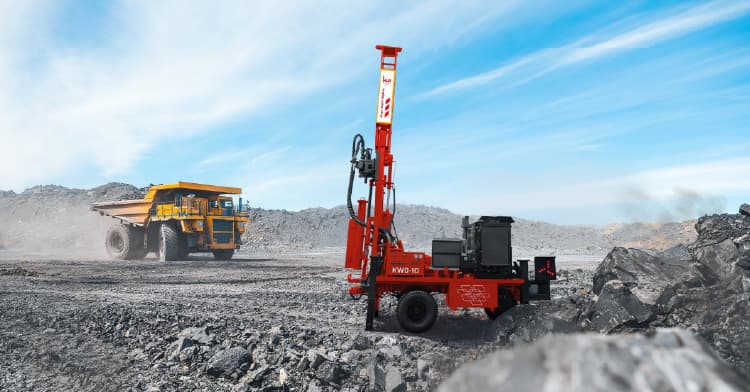
- Mounting Options: Truck-mounted rigs offer speed on roads, while track-mounted rigs can crawl into remote, rugged terrain.
Exploration vs. Production Drilling
It is easy to confuse these two, but they have very different goals. Exploration drilling asks, “Is it there?” while production drilling asks, “How do we get it out?”
| Parameter | Exploration Drilling | Production Drilling |
|---|---|---|
| Purpose | Data collection | Resource extraction |
| Sample Quality | Critical (High) | Not the priority |
| Rig Type | Specialized core/RC rigs | Blast hole or production rigs |
KLR Universal: Built for Discovery
KLR Universal is a trusted drilling rigs manufacturer in India. At KLR, we have spent over 40 years perfecting the tools used in drilling and exploration. Since 1984, we have designed and manufactured exploration drill rigs that perform in the most demanding environments on Earth.
Our range covers everything from exploration diamond drilling to multipurpose setups. We manufacture our rigs in-house to ensure every component meets our ISO 9001:2015 standards. With over 4,500 projects completed across 60 countries, our equipment is field-proven.
Whether you are a startup or one of the major exploration drilling companies, we provide the reliability you need to unlock the next great resource. Contact KLR Universal today to discuss your next project.